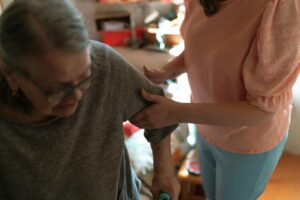
Support at Home is for older Australians who need continuous, regular help at home, rather than just light, occasional help.
It is designed for people with low to very high needs. This includes those who need help with daily tasks, managing health conditions or staying safe at home. It is not only for one-off cleaning or gardening.
The Support at Home program is for:
- Aboriginal and Torres Strait Islander people aged 50+
- People aged 65 years and over
- Some people aged 50+ who are experiencing homelessness or are at risk of homelessness
Services covered by Support at Home
Your Support at Home funding can be used for a wide range of services, depending on your support plan. These are grouped into three categories:
Independence
This includes assistance with personal hygiene, transport, medication management, social connections, assistive technology and respite care.
Clinical care
Such as physiotherapy, nursing, occupational therapy and continence care.
Everyday living
Such as gardening, cleaning, shopping and meal preparation.
Will it cost me anything?
The honest answer is this: it depends on your income and the type of support you get.
Clinical services, such as nursing visits, are fully government-funded for everyone. You do not pay anything extra for those, regardless of your financial situation.
For other services like everyday living support, you may be asked to contribute based on your income. The government means-tests these contributions, so age pensioners usually pay very little or nothing, while self-funded retirees may contribute more.
Whatever your situation, there is a lifetime cap on the full amount you will ever be asked to contribute to your care costs. This cap is indexed twice yearly, so the exact figure moves slightly over time.
Can I buy big-ticket items with my home support budget?
Yes, you can use your budget to pay for large items like mobility scooters or home modifications. Your home care provider will work with you to ensure your budget covers what you need. You can also carry over up to $1000 or ten per cent of your allocation from one quarter to the next.
What happens during the Support at Home assessment?
A member of the My Aged Care assessment team, generally a social worker, nurse or health care professional, will visit you in your home. They will look at the way you manage regular activities and speak with you about what aged care services will be best to help you. The assessment generally takes between one and three hours.
What happens if you already have a home care package?
If you have a home care package, you will be automatically transferred to the Support at Home program on 1 November 2025. You will not need a new assessment unless your needs have changed and you wish to apply for increased support.
The funding you get as part of your home care package will remain the same.
Your current provider will continue to deliver care under the new program, and you should not experience a “gap” in services.